
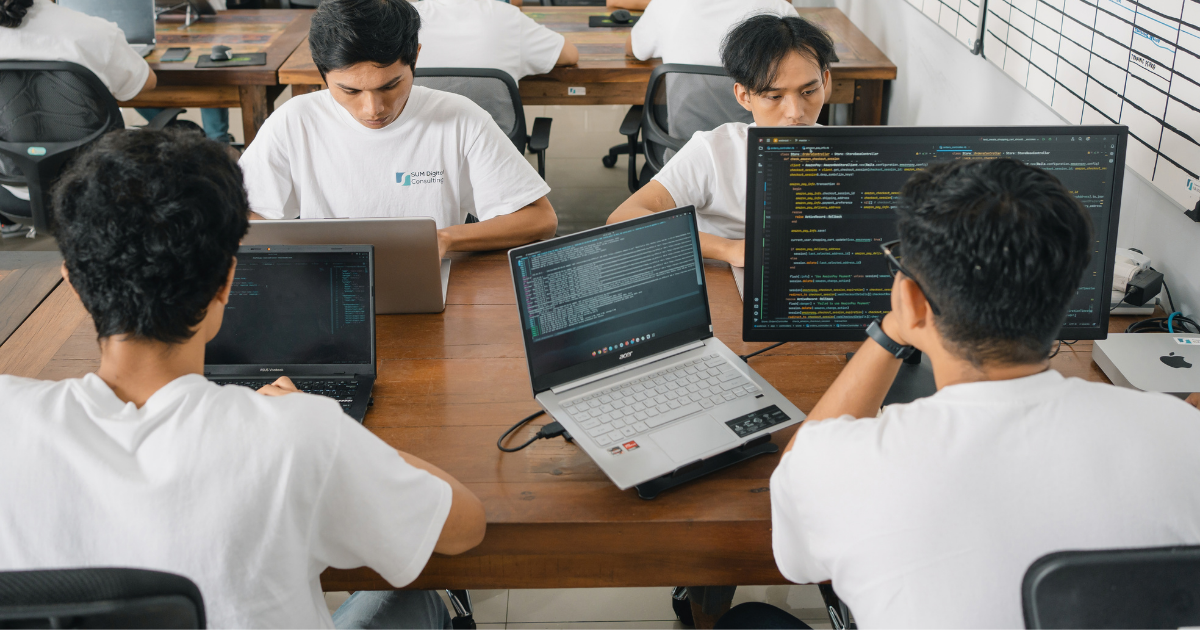
If you've tried to hire a backend developer in Tokyo or Osaka lately, you know the pattern: long searches, salary offers that climb every quarter, and candidates who accept another offer while you're still scheduling the final interview. METI's projections explain why. In its high-demand scenario, Japan could be short of up to roughly 790,000 IT workers by 2030.
Some companies now hire abroad. Vietnam and India have been the default answers for years. Indonesia gets less attention, which is odd, because on the things Japanese teams tend to care about (time zone, working hours, a growing supply of engineers) it holds up well. Here is what to look at, and what to check before you commit.
Who's actually available
Japan's workforce is aging and shrinking; Indonesia's population skews young, and a steady stream of graduates and bootcamp alumni move into software development, UI/UX design, and digital marketing. We won't quote a headcount, since the figure depends on how you define "engineer." The direction is the point. Plenty of Indonesian teams already build for overseas clients, so English documentation, remote code review, and sprint demos over video aren't new to them.
Cost matters, but a rate card won't tell you what you're buying
An in-house hire in Japan costs more than the salary: recruiting fees, benefits, office space, and the months a seat sits empty during the search. An Indonesian team typically costs noticeably less, which is a fair reason to look. But low rates and good work aren't the same thing. Ask instead how the team reviews code, what gets tested before a release, and what happens when a bug turns up on a Friday afternoon.
The time difference is one hour at most
Indonesia covers three time zones. WIB runs two hours behind Tokyo, WITA one hour behind, and WIT matches Japan. Bali is in WITA, so a 10:00 stand-up in Tokyo starts at 9:00 in Bali.
Compare that with Eastern Europe or the Americas, where a morning question can wait a day for an answer. With an hour's difference you can hold Agile ceremonies during ordinary working hours and get on a call the same day something breaks.
Working style needs more than good intentions
Japanese teams tend to expect punctual delivery and frequent updates without being asked: Ho-Ren-So, which stands for report, communicate, consult. Indonesian engineers can work that way, but it doesn't happen by default on either side, and disagreements about when to raise a problem are where offshore projects often go sideways. Japanese pop culture has a big following in Indonesia and some engineers learn the language, which helps but shouldn't be your plan by itself. What matters more is whether someone on the project has worked in both directions.
Where SUM fits
Many Japanese companies hesitate over two things: language and quality control. We're based in Bali and work to Japanese quality standards. Our project managers know Japanese business practice and QA expectations well enough to sit between your team and ours, keeping communication clear, tracking deadlines, and checking that what gets built matches what you asked for. You get the cost structure of an Indonesian team without having to manage the gap yourself.
If the talent shortage is slowing a project down, tell us what you're building and we'll work out whether offshore makes sense. Contact us.