
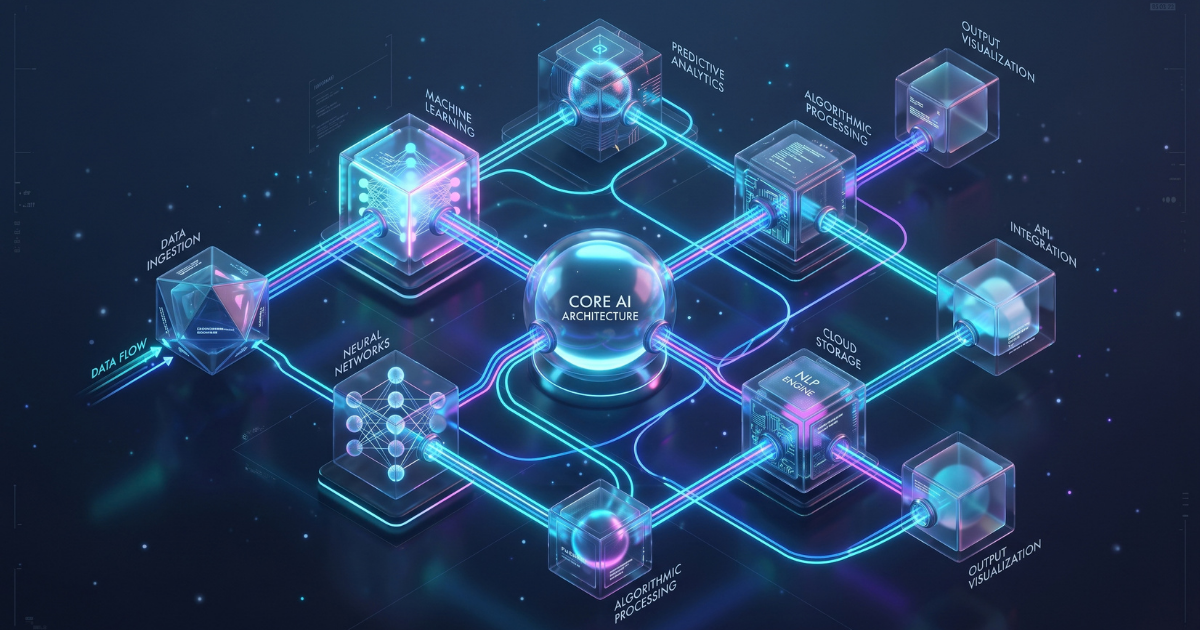
Plenty of teams now pay for a chatbot, a writing assistant, an image generator, and a couple of niche apps on top. Each one does its job. Together they often don't add up to much, because nothing connects them.
Picture an ordinary task. A customer email arrives. Someone copies it into the chatbot, copies the draft reply back into the inbox, then types the outcome into the CRM by hand. The AI saved a few minutes on the writing and cost a few more on the shuffling. Multiply that by every person and every task, and the subscriptions start to look like overhead.
Why separate tools stall
Each tool sits in its own corner with its own login and its own copy of your data. People end up as the connectors, moving information between tabs, and that manual work is where the time goes. It's also where mistakes creep in: the wrong version of a file, a number pasted into the wrong field, a customer record updated in one place and not another.
A new subscription won't fix that, because the gap is in the connections between tools, not in their features.
What a system does differently
A system starts from the business process, not from the tool. You map where information enters, who touches it, and where it gets stuck, then decide where AI helps and where plain automation or a simple rule is enough. Often the answer involves less AI than people expect.
In practice that can mean a model that analyzes your sales or operations data and feeds the results straight into a dashboard your team already uses. It can mean a chatbot that sits inside your customer service flow and hands conversations to a person, with the context attached, when it can't answer. Security belongs in the design from the start, since these systems move customer and company data between places that used to be separate.
The aim is for data to move on its own, securely, to wherever it's needed next, so people spend their time on decisions instead of copy and paste.
Why many companies build this with an offshore team
A connected AI setup needs several skills at once: frontend and backend development, machine learning, and security. Hiring each of those in-house is slow and expensive, and most companies need them for a project rather than forever.
An offshore engineering team can cover that range at a lower cost than building the same team locally. The arrangement that works is a dedicated team that learns your operation, builds the integrations, and stays on to maintain them, because a system like this needs upkeep after launch like anything else.
Where to start
Pick the one process that eats the most hours. Write down every step and every tool it touches, then look for the points where a person is moving data by hand. That list is your first project.
If you'd like help with it, SUM can build the website, the integrations between your systems, or a dedicated offshore team to design and run your internal AI workflows. Read about our offshore development service or contact us to talk it through.